
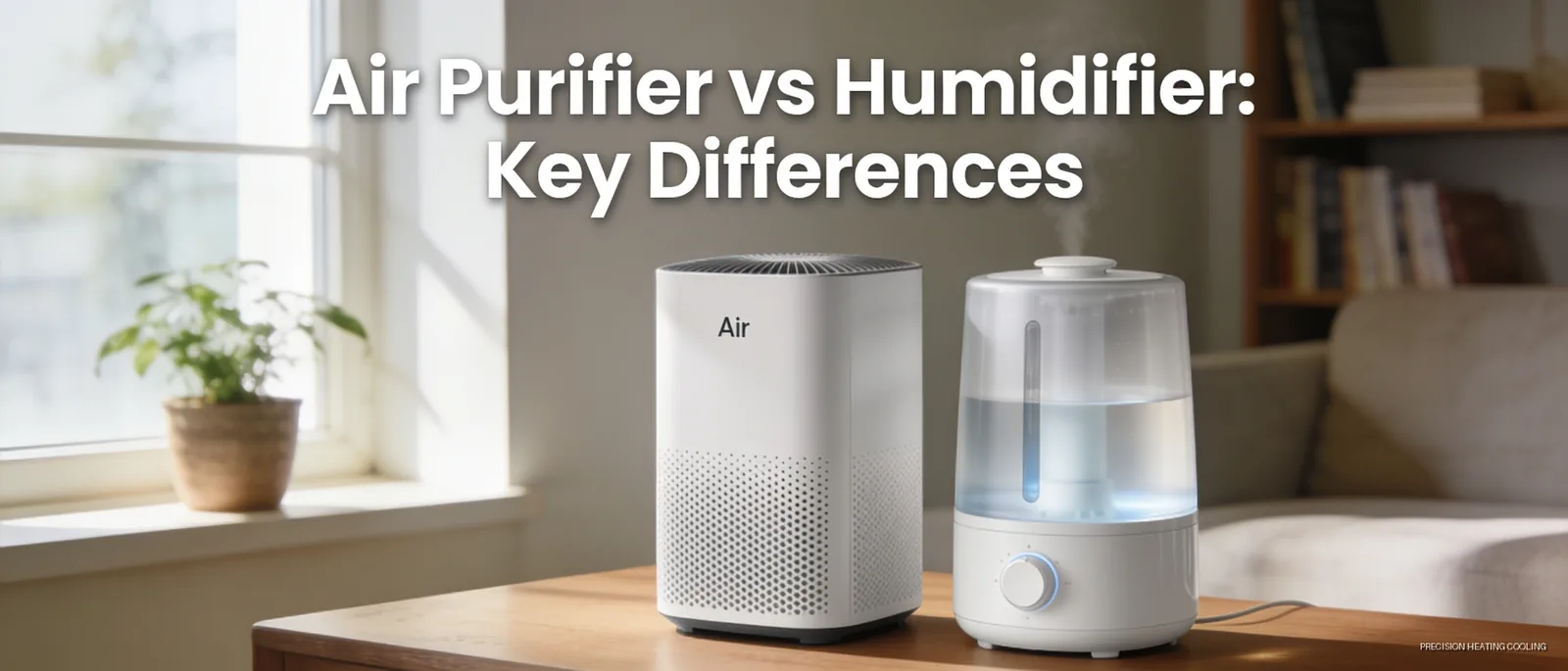
Air Purifier vs Humidifier: Key Differences
Air purifiers and humidifiers serve distinct purposes in every home. As Precision Heating & Cooling, we clean indoor air and remove pollutants like dust and allergens with air purifiers, while our humidifiers add moisture to dry air and relieve dry skin and respiratory discomfort. We recommend air purifiers for allergy sufferers and humidifiers for dry winter conditions, and both improve indoor comfort meaningfully when matched to the right problem.
Key Takeaways
- Air purifiers remove pollutants like dust and allergens from indoor air through filtration technology. We rely on this filtration approach to help households reduce the airborne triggers that cause allergy flare-ups and respiratory irritation.
- Humidifiers add moisture to dry air, relieving skin irritation and respiratory discomfort in homes. We see this moisture restoration make the biggest difference during the driest months of the year.
- Air purifiers address allergies and respiratory symptoms caused by airborne contaminants and particles. We recommend them whenever dust, pet dander, or seasonal allergens are the primary concern in a household.
- Humidifiers solve dry air conditions by increasing moisture levels in your indoor environment. We find this especially valuable once forced-air heating begins pulling natural humidity out of the air.
Why Does Indoor Air Quality Matter So Much?
Indoor air quality directly affects the health and comfort of every person living in a home. Choosing the wrong device — or no device at all — leaves airborne pollutants, allergens, and moisture imbalances unchecked, which compounds respiratory discomfort over time.
We have served Comstock Park, MI for many years, and that experience has shown us, time and again, that homeowners who understand their indoor environment make smarter decisions about the equipment they choose. Contact Precision Heating & Cooling whenever you would like our team to walk through your home’s specific air quality needs.
What Is the Difference Between an Air Purifier and a Humidifier?
An air purifier removes airborne particles and pollutants — dust, allergens, and similar contaminants — from the air circulating through your home. A humidifier takes a different approach entirely: it adds moisture to dry air to relieve skin irritation and respiratory discomfort. Both devices affect the air you breathe, but they solve different problems.
Why Does Choosing the Right Device Matter?
Selecting the wrong device means the underlying problem goes unsolved. Understanding the distinction between these two options is essential to finding the right solution for your specific needs. A home with dry winter air needs moisture restoration, not particle filtration, and the reverse is equally true. We help homeowners identify exactly what their indoor environment requires, so every investment delivers real, lasting comfort.

What Exactly Does an Air Purifier Do?
An air purifier cleans indoor air by drawing airborne pollutants — dust, allergens, smoke, and more — through a filtration system and circulating cleaner air back into the room. Air purifiers do not add moisture to the air; filtration and circulation are their sole functions.
We recommend air purifiers to homeowners who want to reduce the invisible burden of airborne contaminants. Poor indoor air quality strains your respiratory system every single day, and addressing it proactively protects the health of everyone in the home.
What pollutants does an air purifier remove?
Air purifiers target a broad range of contaminants that standard HVAC filters miss. Here is what a quality unit captures:
- Dust and dust mites collect in carpet, bedding, and upholstery. A quality air purifier pulls these particles out of circulation before they settle back into your living space.
- Pollen and seasonal allergens drift indoors through open doors and windows. Continuous filtration keeps these triggers from building up during allergy season.
- Pet dander sheds constantly from cats and dogs. An air purifier captures these microscopic particles that standard cleaning cannot fully remove.
- Smoke particles and odors linger long after cooking or wildfire smoke drifts indoors. Filtration clears both the particles and the smell they leave behind.
- Mold spores travel through the air in damp or humid areas of a home. Removing them from circulation lowers the risk of respiratory irritation.
- Airborne viruses and bacteria can spread through shared indoor air. Filtration reduces the concentration of these microorganisms circulating through a room.
That list covers the most common triggers for respiratory discomfort and allergy flare-ups. Removing these particles from circulation makes a measurable difference in how a home feels to breathe in.
Does an air purifier help with respiratory health?
Yes, and the benefit is direct. The primary goal of an air purifier is to cleanse indoor air of pollutants and allergens, which promotes improved respiratory health over time. Dust, pollen, smoke, and mold spores are all linked to irritation of the airways, and by continuously filtering these contaminants, an air purifier reduces the concentration of particles that trigger symptoms.
It is worth noting what an air purifier does not do. Adding moisture to dry air falls outside its function entirely; that is the role of a humidifier, which we cover separately. Understanding this distinction helps us guide our customers toward the right solution for their specific comfort challenge, rather than investing in equipment that does not address their actual need.

What Exactly Does a Humidifier Do?
A humidifier releases water vapor into a room to raise moisture levels in the surrounding air. Adding moisture to dry air relieves skin irritation and respiratory discomfort, two problems that Michigan winters make all too familiar.
We see the effects of low indoor humidity every season. Dry air is not just uncomfortable — it cracks skin, irritates nasal passages, and makes breathing feel labored. A humidifier directly addresses those conditions by restoring a healthier moisture balance to your living space.
How does a humidifier improve comfort at home?
A humidifier works by converting water into vapor and dispersing that vapor throughout a room. The added moisture eases dry, tight skin and soothes irritated airways, especially during heating season when forced-air furnaces strip indoor air of its natural humidity. The result is a home environment that simply feels better to live in.
Is a humidifier the same as an air purifier?
A humidifier and an air purifier serve distinct purposes, even though both contribute to a healthier indoor environment. A humidifier adjusts moisture levels; an air purifier removes airborne particles and pollutants. Homeowners seeking long-term comfort often benefit from understanding which problem they are actually solving before choosing a device.
Here is a quick side-by-side comparison:
Both devices play a role in whole-home comfort. We help homeowners evaluate their specific indoor air conditions and recommend the right solution, whether that means humidity control, air filtration, or a combination of both.

How Do These Two Devices Compare Side by Side?
Air purifiers and humidifiers both affect the indoor air inside your home, yet each device serves a fundamentally different purpose. The core distinction is straightforward: an air purifier cleans the air by removing pollutants like dust and allergens, while a humidifier adds moisture to air that has become too dry.
We see homeowners confuse these two devices regularly, and that confusion leads to the wrong purchase, and a comfort problem that never actually gets solved. Understanding what each device does is the first step toward making the right choice for your household.
Both devices cater to different aspects of air quality inside a home, and neither one replaces the other. A household dealing with both dry air and airborne allergens may benefit from running both devices, but only after we help identify which problem is the priority.
Does an air purifier also add moisture to the air?
An air purifier does not add moisture to indoor air. Air purifiers work by filtering or neutralizing airborne particles and pollutants; humidity levels remain unchanged. If dry air is the primary concern, a humidifier is the appropriate solution.
Can a humidifier help with allergies or dust?
A humidifier does not remove allergens or dust from the air. Humidifiers adjust moisture levels, which addresses dryness-related discomfort such as irritated skin or a dry cough. For allergy relief or dust reduction, an air purifier is the correct device.
We recommend that homeowners assess their specific symptoms before selecting either device. Dry air and poor air cleanliness are two separate issues, and each one deserves a targeted solution. Our team is available to help you evaluate your home’s air quality needs and recommend the right path forward.
Which Device Should You Choose for Your Needs?
Choosing between an air purifier and a humidifier comes down to one core question: is your primary concern the cleanliness of your indoor air, or the moisture level in it? Knowing the answer to that question points directly to the right device.
We guide homeowners through this decision every day. The two devices solve different problems, and buying the wrong one means living with the same discomfort you were trying to fix.
Does an air purifier help with allergies and pet dander?
An air purifier is the right choice when airborne particles are the root of the problem. Allergies, hay fever, pet dander, and mold concerns all fall into this category. These devices work by capturing and removing the pollutants that circulate through your home’s air and trigger sneezing, itchy eyes, and respiratory irritation. If your household includes pets or anyone prone to seasonal allergies, an air purifier directly addresses those triggers.
When is a humidifier the better option?
A humidifier is the better fit when dry air is the culprit. Dry winter coughs, irritated skin, and that scratchy feeling in your throat on cold mornings are all signs that moisture levels in your home are too low. A humidifier restores that moisture, easing the physical discomfort that dry indoor air causes. It does not clean the air, but when dryness is the problem, cleaning the air does not solve it.
Use this quick-reference guide to match your symptoms to the right device:
Some households benefit from both devices running together, since dry air and airborne allergens are not mutually exclusive, especially during winters when heating systems run continuously. We help homeowners assess their specific indoor air conditions and recommend solutions that match their actual needs, not a one-size-fits-all answer.
Can You Use Both Devices Together?
Yes — running an air purifier and a humidifier side by side delivers benefits that neither device achieves alone. Both devices impact the indoor air you breathe in distinct ways, and pairing them addresses two separate comfort problems at once.
Why Do Both Devices Work Well as a Pair?
An air purifier removes airborne particles like dust, allergens, and pollutants. A humidifier adds moisture to dry air, relieving dry skin and respiratory discomfort. These functions do not overlap; they complement each other. A home can have clean air that is still uncomfortably dry, or properly humidified air that carries allergens. Running both devices together closes that gap and supports a healthier indoor environment year-round.
As Precision Heating & Cooling, we draw on decades of HVAC experience serving Comstock Park, MI, and we regularly help homeowners evaluate which combination of indoor air solutions fits their specific home and lifestyle.
Does Using Both Devices at the Same Time Cause Any Problems?
Placement matters when running both units simultaneously. Keep the humidifier and air purifier in separate areas of the room rather than directly adjacent, since excess moisture released near an air purifier’s filter can reduce the filter’s effectiveness over time. Beyond that straightforward placement consideration, the two devices operate independently and do not interfere with each other’s core function.
Here is a quick summary of what each device contributes when used together:
- Air purifier removes pollutants, allergens, and airborne particles from the air circulating through your home. Running it continuously keeps those contaminants from building back up between cleanings.
- Humidifier restores moisture to dry indoor air throughout the day. Keeping it running during heating season prevents the skin and respiratory irritation that dry air causes.
- Combined use supports both air cleanliness and comfortable humidity levels simultaneously. Together, the two devices cover the two most common indoor air complaints we hear from homeowners.
Together, these devices give homeowners a more complete approach to long-term indoor comfort.
How Do Michigan Winters Affect Your Indoor Air?
Michigan winters seal homes tight against the cold, and that creates two distinct indoor air problems that homeowners in Comstock Park, MI deal with every season. Heating systems strip moisture from the air while closed windows trap airborne pollutants inside, turning a well-insulated home into a source of discomfort.
Does Cold Weather Dry Out the Air in Your Home?
Forced-air heating pulls moisture out of indoor air rapidly. That dryness causes skin irritation and respiratory discomfort — cracked lips, scratchy throats, and restless nights. A humidifier adds moisture back into dry air, directly relieving those symptoms. For families running the furnace from October through April, a humidifier is not a luxury; it is a practical comfort tool.
Do Sealed Winter Homes Trap More Pollutants?
Absolutely. When windows stay shut for months, airborne particles have nowhere to go. Dust, pet dander, and mold spores accumulate in the air your family breathes every day. An air purifier captures those particles and combats mold and odors, reducing the pollutant load that builds up in a tightly sealed home. Without one, every breath indoors recirculates the same contaminated air.
Here is a quick comparison of what each device addresses during a Michigan winter:
We understand how Michigan’s climate creates layered indoor air challenges, and we help homeowners in Comstock Park, MI choose the right solutions to stay comfortable all winter long.
How Can Precision Heating & Cooling Help You?
Precision Heating & Cooling has built a reputation on high-quality work serving Comstock Park, MI residents. As a locally owned company, we deliver comprehensive HVAC solutions, from installation and repair to ongoing maintenance, for both residential and commercial customers.
Choosing the right indoor air solution starts with having a trusted partner who understands your home’s specific needs. Whether you are weighing an air purifier to remove allergens and pollutants, or a humidifier to restore moisture balance during dry Michigan winters, we help you identify the right equipment and install it correctly the first time.
What HVAC Services Do We Offer?
Our services cover the full range of home and business comfort needs. We handle installation, repair, and maintenance of heating, ventilation, and air conditioning systems, so one call resolves virtually any comfort issue. Customers consistently praise our quality and reliability, noting that we deliver on our commitments every time.
Our core service areas include:
- Heating installation, repair, and maintenance covers furnaces, heat pumps, and related equipment. We keep these systems running reliably through every Michigan heating season.
- Cooling installation and repair keeps central AC and related systems performing when temperatures climb. We diagnose and resolve cooling issues so your home stays comfortable through the summer.
- Ventilation and indoor air quality solutions include the air purifiers and humidifiers this article covers. We help homeowners choose and install the right combination for their specific indoor air challenges.
- Preventive maintenance keeps heating and cooling systems running efficiently year-round. Regular upkeep catches small issues before they become larger comfort or reliability problems.
Why Do Customers Trust Precision Heating & Cooling?
Customer satisfaction drives everything we do. Homeowners in and around Comstock Park, MI return to us because we combine decades of hands-on experience with transparent, straightforward service. Our track record reflects a simple commitment: deliver quality work you can rely on, every time.
Ready to Improve Your Home’s Indoor Air Quality?
Both air purifiers and humidifiers address distinct indoor air quality concerns, and understanding their differences helps you choose the right solution for your home. Air purifiers remove contaminants and allergens, while humidifiers add moisture to combat dry air. Your specific needs, whether managing allergies, respiratory comfort, or seasonal dryness, determine which device serves your household best.
At Precision Heating & Cooling, we recognize that optimal home comfort extends beyond temperature control to encompass the air quality your family breathes daily. Reach out to our team to talk through which device, or combination of devices, is the right fit for your home.
FAQ
What does an air purifier do?
It draws airborne pollutants like dust, allergens, smoke, and mold spores through a filtration system and circulates cleaner air back into the room. This continuous filtration reduces the buildup of contaminants that trigger allergy and respiratory symptoms.
What does a humidifier do?
It adds moisture to dry air, relieving skin irritation and respiratory discomfort caused by low humidity levels in your home. This is especially useful during heating season, when forced-air furnaces pull natural moisture out of the air.
Which device is right for allergy sufferers?
An air purifier is the right choice for allergy sufferers. It removes the airborne contaminants and allergens that trigger respiratory discomfort and allergy flare-ups, giving sensitive households cleaner air to breathe every day.