
Preparing Your Home for Winter: The Humidifier Dilemma
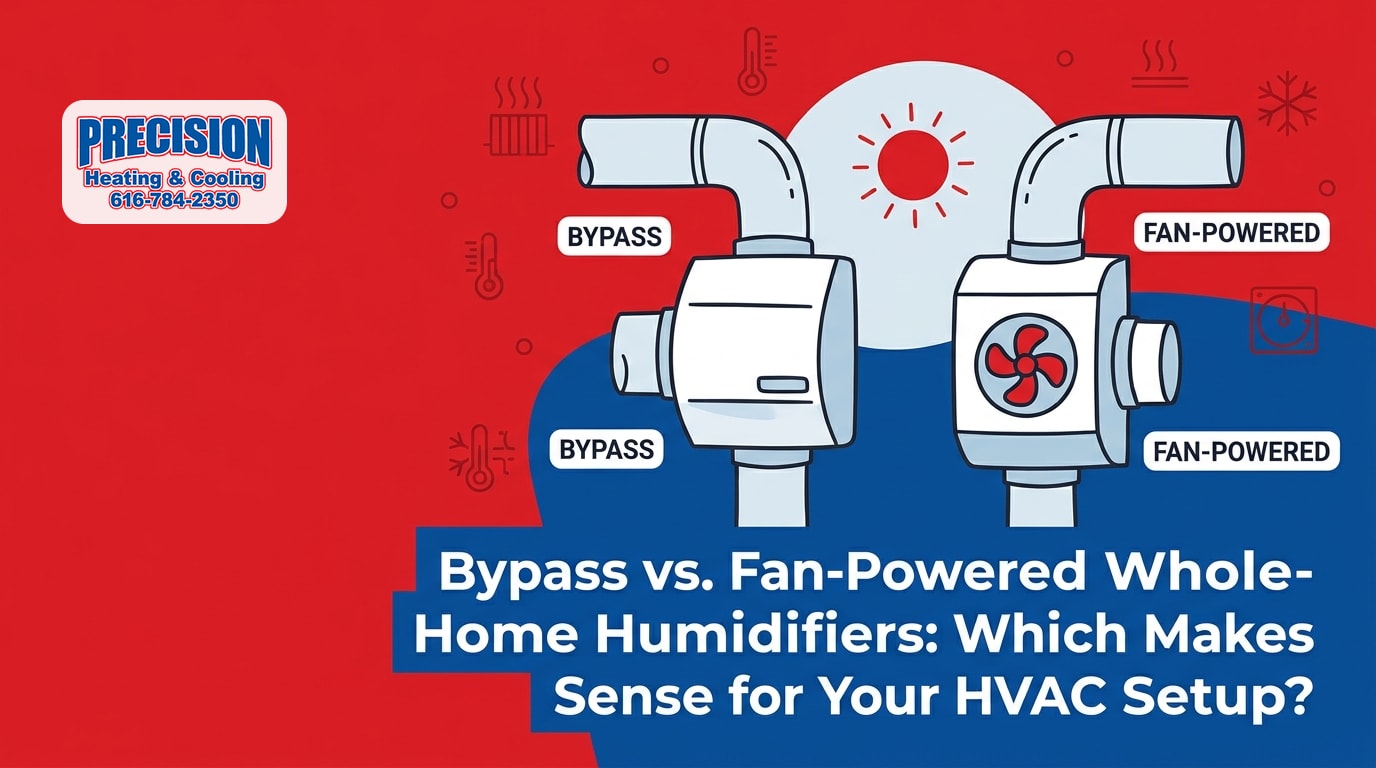
When preparing your home for the dry air of November late fall, you might find yourself asking: Bypass vs. Fan-Powered Whole-Home Humidifiers: Which Makes Sense for Your HVAC Setup? The arrival of the heavy heating season brings familiar, uncomfortable signs of dry indoor air, from static shocks and dry skin to shrinking hardwood floors. The answer to solving this problem permanently depends almost entirely on the physical realities of your existing heating equipment.
Unlike portable units that you have to constantly refill with pitchers of water, a whole-home system integrates directly into your ductwork to treat every room simultaneously. However, choosing the right unit requires a careful look at your utility space, your willingness to perform annual maintenance, and the overall efficiency of your duct layout. A comprehensive approach to your Indoor Air Quality Services starts with understanding exactly how these two distinct types of humidifiers operate, so you can make a choice that enhances your comfort without compromising your furnace.
How Whole-Home Humidifiers Interact with Your Furnace
To understand which system is right for your home, you first need a baseline understanding of how whole-home humidifiers actually work. Regardless of the specific model, these systems rely heavily on your existing furnace and ductwork to distribute moisture throughout the living space. When the humidity level drops below the set point on your humidistat, a water valve opens, allowing a steady trickle of water to flow over an internal evaporator pad (often called a water panel).
The key difference between models lies in how the air is forced across that wet pad. A bypass unit relies entirely on the pressure difference created by your furnace blower, while a fan-powered unit uses its own internal fan to push the air. Both types require a direct connection to your home’s plumbing for a continuous water supply, a drainage line to carry away excess water, and a precise cutout in your sheet metal ductwork.
Homeowners in Comstock Park MI often wonder how this differs from other indoor air quality upgrades. For a broader look at air treatment, understanding the Air Purifier vs Humidifier: Key Differences can help clarify exactly what a humidifier does and does not do. Ultimately, the humidifier’s sole job is to introduce water vapor into the warm air stream before it travels through your supply vents, making a thorough evaluation of your current HVAC setup the most critical step before installation.
Bypass Humidifiers: Pros, Cons, and Space Requirements
A bypass humidifier is the most common type of whole-home unit installed today. It operates on a simple, elegant principle: it uses the natural air pressure generated by your furnace blower to move air. The unit is typically mounted on either the supply or return plenum (the large sheet metal boxes directly above or beside your furnace). A separate 6-inch round duct pipe is then installed to connect the humidifier to the opposite plenum, creating a “bypass” route for the air.
As the furnace runs, hot air is forced through this 6-inch bypass duct, passes through the water-soaked evaporator pad, absorbs moisture, and is then circulated back into the home. Because the system is relatively simple, it comes with distinct advantages and disadvantages as we head into November late fall.
- Fewer mechanical parts: Because it relies on the furnace blower, there is no internal fan motor to fail. This generally leads to high long-term reliability.
- Quieter operation: Without an extra fan running, a bypass humidifier is virtually silent, adding no additional noise to your heating cycles.
- Slight airflow reduction: Because it reroutes a portion of your heated air back through the furnace, it can slightly reduce the overall airflow efficiency of the heating cycle.
- Significant space requirements: The need for the extra 6-inch bypass duct means you must have enough physical room around your furnace to route the pipe safely.
Evaluating Your Plenum Real Estate
The biggest hurdle to installing a bypass humidifier is simply finding the physical room for it. In our experience at Precision Heating & Cooling, our team frequently sees Comstock Park MI homes where the existing ductwork layout dictates the entire installation. The bypass duct requires a clear path from the supply side to the return side. If your furnace is tucked into a very tight utility closet, or if the ductwork is immediately obstructed by floor joists, plumbing lines, or low basement ceilings, there may not be enough “plenum real estate” to accommodate the extra 6-inch piping. A professional assessment is required to determine if the necessary sheet metal modifications can be made safely without restricting your system’s airflow.
Fan-Powered Humidifiers: Efficiency and Installation Realities
For homes where space is at a premium, or where maximum moisture output is required, the fan-powered humidifier is an exceptional solution. Unlike the bypass model, a fan-powered unit features its own internal fan motor. This fan draws air directly from the plenum, forces it across the wet evaporator pad, and pushes the newly humidified air straight into the duct stream.
The most significant physical advantage of this design is that it completely eliminates the need for the 6-inch bypass duct. The entire unit mounts directly onto the supply plenum, making it a much more compact installation. For residents in Comstock Park MI dealing with larger homes or exceptionally dry architecture, this independent operation provides a major boost in performance.
- Higher moisture output: Because it has its own fan, it can push more air across the water panel, generating up to a gallon more moisture per day compared to a similarly sized bypass unit. This makes it ideal for larger square footage.
- Space-saving design: By eliminating the bypass duct, it frees up crucial space on your plenum and is much easier to install in tight utility closets or crowded basements.
- Independent airflow: It does not rob your furnace of its natural air pressure, allowing your heating system to operate at its designed airflow capacity.
- Electrical requirements: The internal fan requires an independent power source, meaning a dedicated 120V electrical outlet usually needs to be wired near the furnace.
- More moving parts: The addition of a fan motor introduces a mechanical component that may require future attention or replacement as part of your overall HVAC Products lifespan.
Head-to-Head: Space, Maintenance, and Water Usage
When making a final decision as November late fall approaches, it helps to see exactly how these two systems stack up against one another in the categories that matter most to daily homeownership. Both systems will significantly improve your indoor air quality, but their physical footprints and operational styles differ greatly.
| Feature | Bypass Humidifier | Fan-Powered Humidifier |
|---|---|---|
| Space Requirements | High. Requires significant room for the unit plus a 6-inch bypass duct connecting both plenums. | Low. Mounts directly to a single plenum with no extra ductwork required. |
| Furnace Interaction | Alters airflow slightly by redirecting a portion of heated air back through the system. | Operates independently, preserving the furnace’s natural air pressure and flow rate. |
| Moisture Output Capacity | Moderate to High. Excellent for small to medium-sized homes. | Very High. Best suited for larger homes or homes with very leaky building envelopes. |
| Water Usage Efficiency | Uses water efficiently, but continuous bypass airflow can lead to slightly more evaporation waste. | Highly efficient moisture delivery due to the dedicated, directed internal fan. |
| Electrical Needs | Low. Only requires low-voltage wiring for the humidistat and solenoid valve. | Moderate. Requires a 120V outlet to power the internal fan motor. |
Ultimately, the layout of your ductwork will heavily influence this comparison. If you have a sprawling basement with wide-open ductwork, a bypass unit is a cost-effective, reliable workhorse. If your furnace is squeezed into a hallway closet, the fan-powered unit is often the only viable choice.

The Reality of Changing Water Panels in Tight Utility Closets
No matter which whole-home humidifier you choose, there is one unavoidable reality: the water panel (or evaporator pad) must be replaced regularly. These panels are typically made of an aluminum mesh coated in a specialized clay that holds water. Over time, as water evaporates, it leaves behind mineral deposits. If left unchanged, this scale buildup will completely block the airflow, rendering the humidifier useless and potentially causing water to leak inside the furnace cabinet.
The physical chore of changing this panel is where the location of your HVAC system becomes critical. Our technicians at Precision Heating & Cooling find that in an open Comstock Park MI basement, popping the cover off a bypass humidifier and sliding in a new panel takes only a few minutes. However, a pattern we see often is that if your unit is installed in a tight utility closet, squeezing past the water heater and reaching over the exhaust flues to access the humidifier cover can be a frustrating, knuckle-scraping task.
When deciding between a bypass and a fan-powered unit, carefully consider where the unit will be mounted and how easily you will be able to access the front cover. Fan-powered units, because they don’t require the extra bypass piping, often allow for a cleaner, more accessible installation on the front of the plenum. If you know that accessibility is going to be an issue, or if you simply prefer not to deal with scaling and mineral buildup, enrolling in a professional HVAC maintenance plan ensures that this vital panel replacement is handled for you during your annual tune-up.
Matching Your Humidifier to Heavy Winter Heating Cycles
The urgency of installing a humidifier becomes clear when you understand the science of winter air. Cold air simply cannot hold as much moisture as warm air. When freezing outdoor air infiltrates your home and is subsequently heated to 70 degrees by your furnace, its relative humidity plummets drastically. During November late fall, it is not uncommon for indoor humidity levels to drop below 15%—drier than the Sahara Desert.
With summer temperatures far behind us, the reality of Comstock Park, MI winters means extreme cold makes whole-home humidification crucial. The constant, heavy furnace cycles required to combat freezing temperatures dictate a need for highly efficient moisture delivery. Every time the furnace kicks on, it is essentially baking the moisture out of your living space.
The Environmental Protection Agency (EPA) recommends maintaining indoor relative humidity between 30% and 50% for optimal health, comfort, and protection of your home’s woodwork. For larger local homes battling constant dry air during deep freezes, this heavy demand often tips the scales toward fan-powered units. Their ability to force higher volumes of moisture into the airstream independently ensures that the home reaches that comfortable 40% target much faster, even when the furnace is running non-stop.
Frequently Asked Questions About Whole-Home Humidifiers
Do bypass humidifiers require more space?
Yes, bypass humidifiers generally require more physical space around the furnace. Because they rely on a separate 6-inch round duct pipe to connect the supply and return plenums, your ductwork must have adequate clearance to route this piping safely without sharp bends or obstructions. Homes in Comstock Park MI with tight utility closets often struggle to accommodate this extra ducting.
Which uses less water: bypass or fan-powered humidifier?
Both types of humidifiers use water efficiently, but fan-powered units tend to have a slight edge in overall moisture delivery efficiency. Because they use a dedicated internal fan to push air directly across the water panel, less water is wasted down the drain compared to a bypass unit, which relies entirely on the passive pressure of the furnace blower.
How often do you change water panels in whole-home humidifiers?
You should change the water panel (evaporator pad) at least once per heating season, typically right before you start using the furnace heavily in the fall. If your home has exceptionally hard water with high mineral content, you may need to replace the panel twice a season to prevent scale buildup from blocking the airflow and reducing the unit’s effectiveness.
Do fan-powered humidifiers need a bypass duct?
No, fan-powered humidifiers do not need a bypass duct. They are designed with their own internal fan motor that draws air from the plenum, forces it across the wet evaporator pad, and pushes it directly back into the ductwork. This self-contained design saves significant space on your plenum.
Can I install a fan-powered humidifier on any furnace?
While fan-powered humidifiers are highly versatile, they cannot simply be slapped onto any furnace without evaluation. They require enough flat surface area on the supply plenum to mount the unit, a nearby water line, a floor drain, and a dedicated 120V electrical outlet to power the internal fan. A professional assessment is required to ensure your specific ductwork can support the installation.
Make the Right Choice for Your HVAC Setup
Ultimately, the decision between a bypass and a fan-powered humidifier comes down to a careful evaluation of your available plenum space, the size of your home, and your preferences for ongoing maintenance. While bypass units offer quiet, reliable operation with fewer moving parts, fan-powered units deliver superior moisture output and a space-saving design that eliminates bulky bypass ducts.
By understanding exactly how each type interacts with your specific furnace, making the right choice as we head into November late fall becomes much more straightforward. Precision Heating & Cooling offers expert guidance to ensure the right humidifier is seamlessly paired with your specific heating setup, taking the guesswork out of the installation process. Before the deep cold sets in, schedule an inspection of your ductwork to determine which unit will fit your space perfectly. Reach out today for professional Heating and Furnace Services and secure a comfortable, properly humidified home all winter long.