The Hidden Complexities of Replacing a Mid-Century Heating System Before Winter
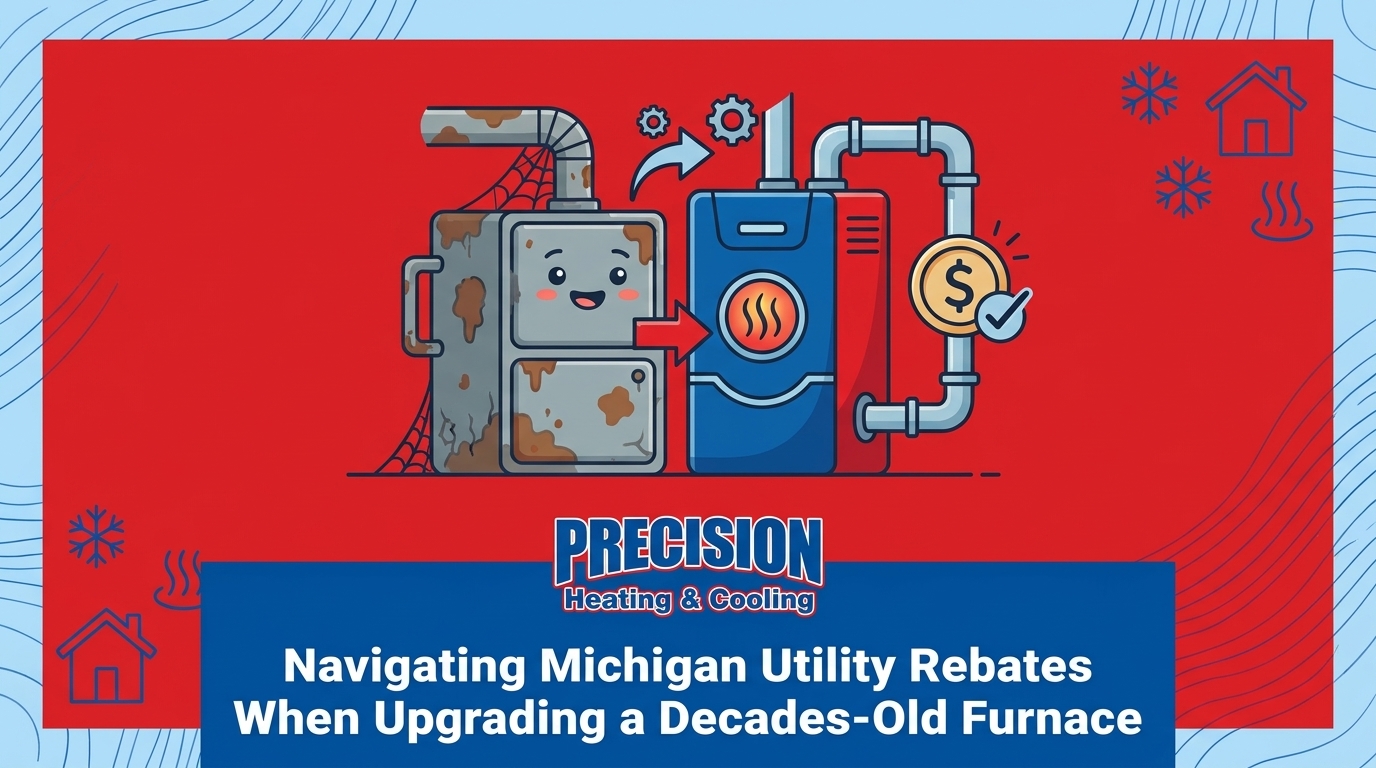
That familiar, heavy rumble from the basement is getting louder, and you know your aging heating equipment is running on borrowed time. Based on our years of experience serving Comstock Park, navigating Michigan utility rebates when upgrading a decades-old furnace requires understanding that the process involves much more than swapping out a metal box. Many homeowners assume a replacement is a straightforward one-to-one exchange. However, if your goal is to install a modern, high-efficiency system that qualifies for local utility incentives, the structural reality of your home will dictate the scope of the project. A mid-century home was simply not built to handle the advanced airflow and exhaust requirements of today’s climate control technology.
As the September pre-heating season approaches, you face an important decision point. You can either settle for a standard-efficiency unit that fits your existing infrastructure, or you can invest in the necessary structural modifications to accommodate a high-efficiency system and unlock qualifying local utility incentives. Making the leap to advanced technology requires careful planning, professional assessment, and a deep understanding of your home’s unique physical constraints.
If you are ready to explore your options and plan your upgrade before the cold sets in, our team provides comprehensive residential heating and cooling services to guide you through the process.
Retrofitting a decades-old home presents a unique set of challenges. In the many mid-century homes our technicians have evaluated, we see that the architecture of the era prioritized different building standards, meaning everything from the chimney layout to the electrical panel may need a thorough evaluation. Attempting to force a modern system into an outdated framework without proper modifications will not only void warranties but also instantly disqualify you from energy rebate programs. The key to a successful upgrade lies in addressing these hidden complexities head-on.
Why 1960s Home Infrastructure Requires Upgrading for Modern Heating
The gap between mid-century engineering and modern HVAC technology is vast. When our crew works in Comstock Park neighborhoods built around 1964, we typically find the original heating system operated at a 60% to 65% Annual Fuel Utilization Efficiency (AFUE) rating. This means a significant portion of the fuel consumed was lost as exhaust heat up the chimney. Today’s high-efficiency systems operate at 90% AFUE or higher, converting nearly all their fuel directly into usable heat for your living space. This drastic shift in operational design requires entirely different infrastructure to function safely and effectively.
One of the most significant hurdles we encounter is the original masonry chimney. In the past, older units relied on natural draft venting, sending hot, buoyant combustion gases straight up the brick flue. Modern systems extract so much heat from the combustion process that the resulting exhaust gases are much cooler and lack the thermal buoyancy to climb a traditional chimney. If a new unit is improperly vented into an old masonry chimney, the cool exhaust will stall, condense, and rapidly deteriorate the brick and mortar from the inside out.
Beyond venting, the electrical demands and physical footprint of modern units differ from their mid-century counterparts. Upgrading your system often means addressing these foundational elements before the new unit ever arrives. If you are considering a furnace upgrade and replacement, understanding these structural prerequisites is the first step.
| Infrastructure Component | 1960s Original Standard | Modern High-Efficiency Requirement |
|---|---|---|
| Exhaust Venting | Masonry chimney with natural draft | Dedicated PVC piping for powered exhaust |
| Combustion Air | Pulled directly from the basement/indoor air | Dedicated PVC intake piped from outdoors |
| Blower Motor | Single-speed, low static pressure tolerance | Variable-speed, requires precise static pressure |
| Condensate Management | None required (hot exhaust gas only) | Dedicated acidic drainage system required |
Evaluating Original Ductwork and Airflow
The ductwork hidden behind your walls plays a massive role in the success of a high-efficiency retrofit. Homes built decades ago were typically outfitted with duct systems sized for lower airflow volumes. Modern blower motors, particularly variable-speed models, are designed to push a specific, higher volume of air to achieve their rated efficiency. If the existing ducts are undersized, the new blower motor will struggle against excessive static pressure.
The impact of undersized ducts:
- Premature wear: The motor works overtime, leading to early failure and costly repairs.
- Increased noise: High-velocity air forced through narrow ducts creates a loud, disruptive rushing sound.
- Efficiency loss: The system cannot deliver the conditioned air properly, negating the energy savings you invested in.
Proper airflow is an absolute requirement for achieving the rated efficiency of a new unit. When our Precision Heating & Cooling technicians perform an assessment, we measure the static pressure of your existing ductwork to determine if modifications, such as expanding the return air drop or adding supply vents, are necessary. These structural modifications are strict prerequisites for meeting utility incentive program guidelines, as programs require proof that the installed system can perform at its advertised efficiency level.
Venting and Condensation: The Technical Realities of High-Efficiency Retrofits
Transitioning to a 95% efficiency furnace introduces entirely new physical processes into your home. The secret to this high efficiency lies in the inclusion of a secondary heat exchanger. While standard systems expel combustion gases immediately after the primary heat exchange, high-efficiency models route those gases through a secondary chamber to extract the last remaining bits of thermal energy.
The Problem: This extreme heat extraction causes a phase change. The combustion gases cool so significantly that they condense into a liquid state before leaving the unit. This liquid is not just water; it is a highly acidic byproduct of the combustion process.
The Cause: Mid-century HVAC layouts were never designed to manage acidic liquid waste. Traditional metal flues and standard floor drains will quickly corrode if exposed to this untreated condensation.
The Solution: In our installations, we ensure specialized, dedicated drainage solutions are included. This involves routing the condensate through a neutralizer cartridge—which balances the pH level of the acidic liquid—before safely directing it to a designated drain or utilizing a condensate pump to move it outside the home.
Furthermore, because the exhaust gases are now cool and lack the natural upward draft, they must be actively pushed out of the home. This requires transitioning from metal chimney venting to dedicated PVC combustion air and exhaust piping. These PVC pipes are typically routed directly through the side wall of the home. This dual-pipe system not only expels exhaust safely but also pulls fresh combustion air directly from the outside, rather than consuming the conditioned air inside your home.
These technical realities underscore why professional furnace installation matters. We’ve seen firsthand how improper venting or inadequate drainage does more than just damage your property; it instantly disqualifies a system from receiving energy rebates. Utility programs require strict adherence to manufacturer specifications and local building codes, and any deviation in the venting or condensate management will cause the application to fail.
Unlocking Qualifying Local Utility Incentives with Dual-Utility Certifications
Securing generic local utility incentives requires more than simply purchasing a highly rated unit. The administrative side of the upgrade is just as complex as the physical installation. In Michigan, maximizing your return often hinges on understanding and navigating dual-utility certifications.
Dual-utility certification refers to the rigorous documentation process required when an HVAC upgrade impacts both your natural gas consumption (the heating unit) and your electrical consumption (the advanced blower motor). Because a 95% efficiency furnace reduces both types of energy use, utility providers offer incentives based on the verified reduction of both resources. However, claiming these incentives requires a contractor with specific certifications to properly document the retrofit across both utility categories.
Our team at Precision Heating & Cooling brings specific expertise in navigating complex dual-utility certifications for homeowners in the Comstock Park area, ensuring installations meet all strict administrative requirements. The paperwork involved is dense, requiring precise load calculations, AHRI (Air-Conditioning, Heating, and Refrigeration Institute) matching certificates, and detailed proof of the structural modifications discussed earlier.
When homeowners attempt to manage this paperwork independently or work with uncertified personnel, they frequently encounter roadblocks. A single missing measurement or an incorrect model number on the application can result in a complete denial of the incentive. Certified contractors handle this complex administrative burden on your behalf, ensuring that the installation is documented exactly as the utility providers demand. If you want to explore the generic rebates available for your specific home, reviewing current special offers and rebates can provide a helpful starting point.

Timing the Retrofit: Avoiding the Winter Emergency Rush
The timeline of your upgrade is just as critical as the equipment you choose. Planning a complex retrofit during the September pre-heating season offers significant logistical and financial advantages over waiting for a breakdown. When the temperatures drop, the HVAC industry shifts into emergency mode. During this peak winter rush, equipment lead times stretch out, and utility incentive processing times extend significantly due to the high volume of applications.
A planned early fall retrofit allows for a methodical, stress-free installation. Undertaking extensive venting modifications, resizing ductwork, and routing new PVC pipes takes time. When weather conditions are still favorable, these structural repairs can be completed without leaving your home freezing for days. Contrast this with the reality of an emergency replacement during a blizzard, where the immediate goal is simply restoring heat, often forcing homeowners to settle for standard equipment because the necessary structural modifications for a high-efficiency unit cannot be completed quickly enough.
Consider a scenario our emergency crew faced last winter: one local homeowner faced a situation where their original 1964 heating unit finally failed right between Christmas and New Year’s. Because we had already discussed the requirements for a 95% efficiency unit, our team was able to execute the complex replacement on a Saturday, restoring heat with a high-efficiency system despite the challenging holiday timing. However, relying on emergency availability is a massive risk. Proactive scheduling ensures that the necessary parts, certified technicians, and administrative time are all secured well before the snow flies.
The Timeline Advantage of Early Fall Planning:
- Thorough Assessment: Ample time to measure ductwork and plan PVC routing without the pressure of a freezing house.
- Equipment Availability: Access to the exact high-efficiency models required for your specific dual-utility rebate goals.
- Favorable Weather: Exterior wall penetrations for new venting are much safer and easier to seal properly before freezing temperatures arrive.
- Faster Rebate Processing: Submitting paperwork before the winter backlog begins often results in faster processing of your utility incentives.
Beyond the Rebates: The Lasting Value of a Properly Retrofitted System
While unlocking local utility incentives is a strong motivator for upgrading, the true value of a properly retrofitted system extends far beyond the initial paperwork. Transitioning from an outdated, inefficient unit to a modern climate control solution fundamentally changes how your home feels and operates. Harsh Michigan winters demand reliable, high-efficiency heating, making the transition from a decades-old system to a modern unit a critical comfort necessity for the region.
We constantly remind our customers that when you invest in the structural hurdles—resizing the return air drops, installing dedicated PVC venting, and managing the condensate—you are building a foundation for long-term reliability. A 95% efficiency furnace that breathes correctly through properly sized ducts will operate quietly, evenly distributing heat to every corner of the house. You will notice a significant reduction in energy waste, as the variable-speed blower motor adjusts its output to maintain consistent temperatures rather than blasting on and off in loud, inefficient cycles.
Furthermore, a system customized specifically for your home’s infrastructure experiences far less mechanical strain. The longevity of the equipment is directly tied to the quality of the installation environment. By addressing the limitations of your mid-century home upfront, you protect your investment from premature wear and tear. Connecting the initial investment in structural upgrades to long-term peace of mind is what transforms a simple equipment purchase into a comprehensive upgrade. To learn more about maximizing your home’s performance, exploring professional energy efficiency services can provide further insights into whole-home comfort.
Frequently Asked Questions About High-Efficiency Furnace Retrofits
What modifications are needed for a 95% efficiency furnace?
A 95% efficiency furnace requires dedicated PVC piping for both intake air and exhaust, as the exhaust gases are too cool to draft up a traditional chimney. Additionally, the system needs a specialized drainage setup to safely remove acidic condensation produced during the secondary heat exchange process. Finally, your existing ductwork must be evaluated and potentially resized to handle the specific airflow demands of a modern variable-speed blower motor.
How do I qualify for utility incentives when upgrading my HVAC?
Qualifying for generic local utility incentives requires installing equipment that meets specific high-efficiency benchmarks (typically 90% AFUE or higher) and having the installation performed by a certified professional. The contractor must submit detailed administrative paperwork, including AHRI matching certificates and proof of proper installation, to verify the energy reduction. Attempting a DIY installation or using uncertified personnel will generally void any eligibility for these programs.
Can you put a high-efficiency furnace in an old house?
Yes, you can install a high-efficiency furnace in an older house, but as we often tell our customers, it is rarely a simple swap. Older homes, especially those built in the mid-century, require structural retrofitting to accommodate the new technology. This includes abandoning the old masonry chimney for venting, routing new PVC pipes through the exterior walls, and ensuring the original ductwork can handle modern airflow pressures without causing system strain.
Does a 95% furnace need new venting?
Yes, a 95% furnace absolutely requires new, dedicated venting. Because these units extract almost all the heat from the combustion process, the resulting exhaust gas is cool and cannot rise naturally through a standard metal or brick chimney. Instead, the system uses a powered fan to push the exhaust through PVC piping directly out the side or roof of the home.
Why is dual-utility certification important for HVAC upgrades in Michigan?
Dual-utility certification is important because modern high-efficiency systems reduce both natural gas consumption (through better heat extraction) and electrical consumption (through advanced blower motors). Certified contractors can properly document these reductions across both utility types, ensuring the homeowner receives the maximum allowable generic incentives from both their gas and electric providers.
How long does a complex heating retrofit take in a mid-century home?
A complex retrofit in an older home typically takes one to two full days, depending on the extent of the necessary structural modifications. Routing new PVC venting through thick exterior walls, resizing sheet metal ductwork, and setting up neutralizer drainage systems add significant labor time compared to a basic replacement. Planning this work during the early fall ensures the project can proceed smoothly without leaving the home cold overnight.
Secure Your Home’s Comfort and Navigate Your Energy Incentives Today
Retrofitting a decades-old home in Comstock Park for modern climate control is undeniably complex, but in our experience, the transition is smooth and highly rewarding when executed properly. The physical challenges of upgrading venting, managing condensation, and evaluating mid-century ductwork are significant, but they are entirely manageable when handled by certified professionals who understand the strict administrative requirements of local utility programs.
Do not wait until the first major freeze forces you into an emergency decision. Schedule a thorough inspection with our team today to evaluate your current ductwork, chimney layout, and electrical infrastructure. By talking to a local expert about your specific situation, you can gain a clear understanding of what it takes to safely install a high-efficiency system and successfully navigate the paperwork for qualifying local utility incentives.
Read More